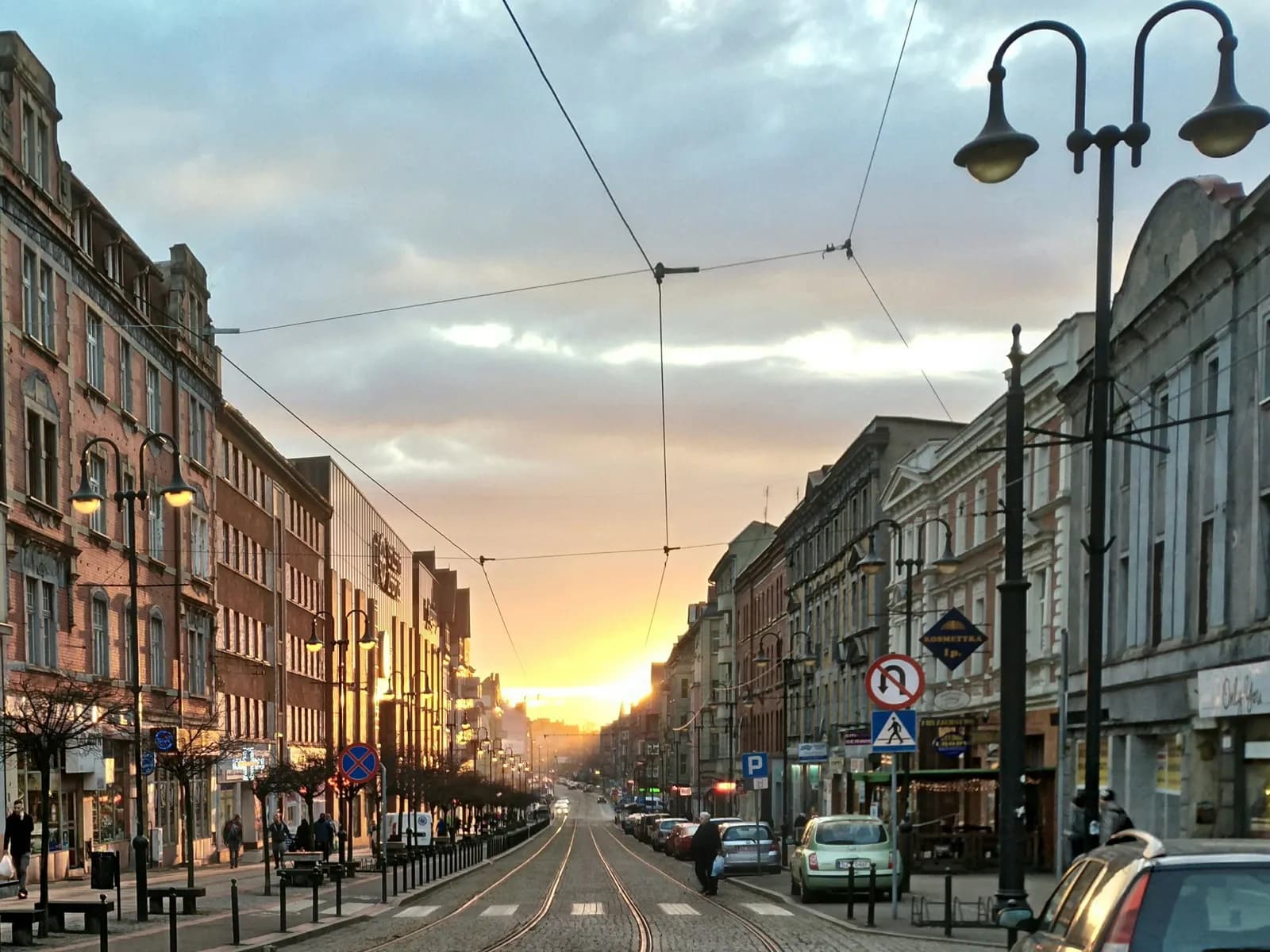
Tracing the industrial roots and changing fortunes of Zabrze’s centre, where shopping, community and local life continue to intersect.
Walk through the heart of Zabrze today and you won’t find the bustling medieval market square that often shapes a Polish city. Instead, you encounter a centre forged in the practical spirit of Upper Silesia’s industrial age. Here, the rhythm of shopping and daily life has been closely linked to the steady pulse of the city’s mines, factories and hard-working communities.
Zabrze grew rapidly in the 19th and 20th centuries as coal, coke and heavy industry drew workers and their families to its core. The city centre emerged not as a showpiece, but as a hub of services, shops and meeting places shaped by the needs of everyday residents. For decades, local spending and the fortunes of the high street rose and fell in step with the shifts of industry. Many can recall when the centre bustled at the end of every shift, shopfronts alive with familiar faces and Silesian accents, neighbours catching up as they ran errands or queued at the bakery.
Today, Zabrze’s retail heart reflects broader changes seen across post-industrial towns in Poland and beyond. Modern chain stores stand next to traditional service outlets, all adapting to the growing pull of out-of-town shopping centres and the rise of online retail. The city centre is no longer the sole focus. New retail hubs like Galeria Zabrze and several large supermarkets now draw shoppers towards the station area and the outskirts. While the old mix of owner-run shops and market stalls has faded, these new venues bring their own energy and possibilities. This shows how retail life has decentralised yet remains a vital part of the city’s fabric.
After the Second World War, Zabrze’s identity was reshaped when it became part of Poland and grew within a changing political and economic landscape. Few places illustrate these shifts as clearly as its high street, where the routine of shopping, meeting friends or grabbing a quick lunch have adapted with the times. Today’s centre competes not just on price or range, but as a place to connect, access everyday services and feel part of a larger community.
For residents in Śląskie, the changing fortunes of Zabrze’s markets and high streets are more than a story of shops opening and closing. They tell of the city’s ability to adapt, to serve its people, and to hold onto a sense of place even as habits and times change. In the efficiency of a supermarket aisle, the convenience of a new shopping centre or the familiarity of a local bakery, the spirit of Zabrze’s centre lives on, shaped by history, challenge and community resilience.